



Plymouth Town Clerks – just a flavour
 Town Clerks of Plymouth – just a flavour.
This is not a history of the town clerk’s responsibilities within the council, nor is it a full list of these men. Little is written about the administrative organisation of the borough of Plymouth or the people who undertook the task, despite its being the first borough to be incorporated by Act of Parliament (in 1439), rather than by Royal grace. The original Act meant that Plymouth was only answerable to itself and the Monarch. This blog is just to give to a flavour and encourage you to explore further.
There is little detailed primary documentation in relation to the office of Plymouth Town Clerk, but there is a wonderful bill from Henry Watts in 1673, for making a suit and cloak for the Town Clerk. The whole suit cost over £14 and contained at least 10 dozen buttons.
It is worth noting, that following an Act of Parliament, commissioners for lighting, watching and paving were appointed for the town in 1770. The commissioners consisted of the mayor and corporation, recorder, town clerk, coroner and 30 citizens. A good record of their activities has survived in accession 1690 held by The Box, Plymouth.
Until self-reform in the early 19th century, the town was generally controlled by the magistrates. A group of freemen successfully broke the hold that these men had through a series of lawsuits. Following this reform in 1803, 21 freemen were elected annually in the common hall to administer the corporate estates, and they then elected the mayor, aldermen, recorder and town clerk. The Town Clerk was originally appointed by the corporation and was required to reside in Plymouth. Later, the position could be served by deputy. Full national municipal reform took place in 1835 following the Municipal Corporations Act. As a result of this, Plymouth set up its first six committees – Watch, Land, Finance, Market, Hoe and Water.
The Town Clerk was the most senior administrative officer in the council. You get some idea of its importance from a newspaper report in 1909, when it was recommended that his salary be cut by 25%. He was the highest paid official and earning, in total, £1,250 per annum, considerably more than the next officer(s) down the line. To put that into contest, Colin Campbell’s starting salary 25 years later in 1935 was to be £1,500 and in the early 1900s, you could buy a 3 bedroomed terraced house for £100-200. This officer’s salary was obviously a hot topic, as in 1883 another newspaper report records a protest by Frankfort Ward electors against a proposed increase.
The title of Town Clerk was replaced by Chief Executive when Plymouth became a Unitary Authority on 1 April 1998.
Some Documents
There are some papers in The Box, Plymouth, detailing the duties of the Town Clerk in the 19th century. I’ll look forward to finding out what they were. The account book from 1793-1799 is another document that I look forward to seeing and discovering what gems it yields. The letter books compiled by his office from 1808-1843 have survived and tell some fascinating and sometimes alarming tales to the reader. From 1874, when the Guildhall and Civic Offices were built, until the blitz of 1941, the borough records remained safely in the possession of the Town Clerk. A document in The National Archives concerning post-war redevelopment, confirms that the destruction of the buildings and the Town Clerk’s records took place on 21 March 1941. Despite trying to start again, another raid destroyed those compiled between 22 March and 22 April. Incredibly, many of the early municipal records as calendared by R N Worth in the 19th century survived.
Some Plymouth Town Clerks
The following is a list of some of the holders of this office, with rough dates, gleaned from a quick check of the online catalogue, publications and some newspaper reports:
- 1539 – James Horswell
- 1605-1613 – Matthew Boye(s)
- 1613 – John Fowell
- 1625 – Edmund Fowell
- c1647-1662 – William Yeo
- 1662-c1665 – Philip Shapcott
- c1683-1699 – Edmund Pollexfen
- 1699 – Robert Berry
- 1705-1722 – Francis Pengelly
- 1722 – Richard Waddon
- c1725-c1742 – Aaron Baker
- 1764 – Philip Vyvyan
- 1768 – John Heath
- 1769 – Charles Fanshawe
- 1793-1799 – Warwick Tonkin
- 1800-c1830 – Joseph Whiteford, deputy (he was also Solicitor to the Hospital of the Orphans Aid)
- c1827-c1874 – Charles Whiteford (possibly junior and senior)
- c1880-1879 – J Walter Wilson (in his clerkship, the first thorough arrangement of the municipal records was made)
- 1891-c1915 – John Henry Ellis (during his clerkship, the first printed calendar of the borough muniments was needed and compiled by RN Worth)
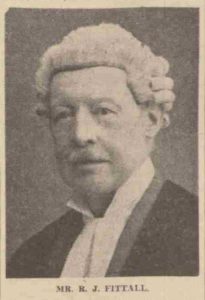
- c1917-1935 – Robert John Fittall
- 1935-1953 – Colin Campbell
- 1953-1970 – Stuart Lloyd Jones
To sum up
So, there you are. Just a flavour as promised. There is a lot more research that could be done on this important office and the characters of the individuals that held it.